One of the first questions homeowners ask when they start exploring heat pumps is a practical one: how long will this actually take? The answer depends on the type of system, the condition of your home, your installer's schedule, and whether you are applying for a grant. That said, most UK installations follow a broadly predictable sequence, and understanding each stage helps you plan around it with confidence.
Everything starts with a heat loss survey, also called a room-by-room heat loss calculation. A qualified installer measures each room, records insulation levels, window sizes, and the existing heating distribution system, then calculates how much heat output your home actually needs. This is not a quick visual walkthrough — a thorough survey for a typical three- or four-bedroom house takes two to four hours on site. The resulting report determines what size heat pump you need and whether your radiators or underfloor heating circuits are adequate to distribute the heat effectively. MCS-certified installers are required to carry out this calculation before any system is designed; if a company skips it or quotes you over the phone without visiting, treat that as a red flag.
Most installers can arrange an initial survey within one to two weeks of first contact, though busy periods — particularly autumn, when homeowners think ahead to winter — can push this out. Some companies offer a preliminary desktop assessment using your EPC and floor plans before committing to a full site visit.
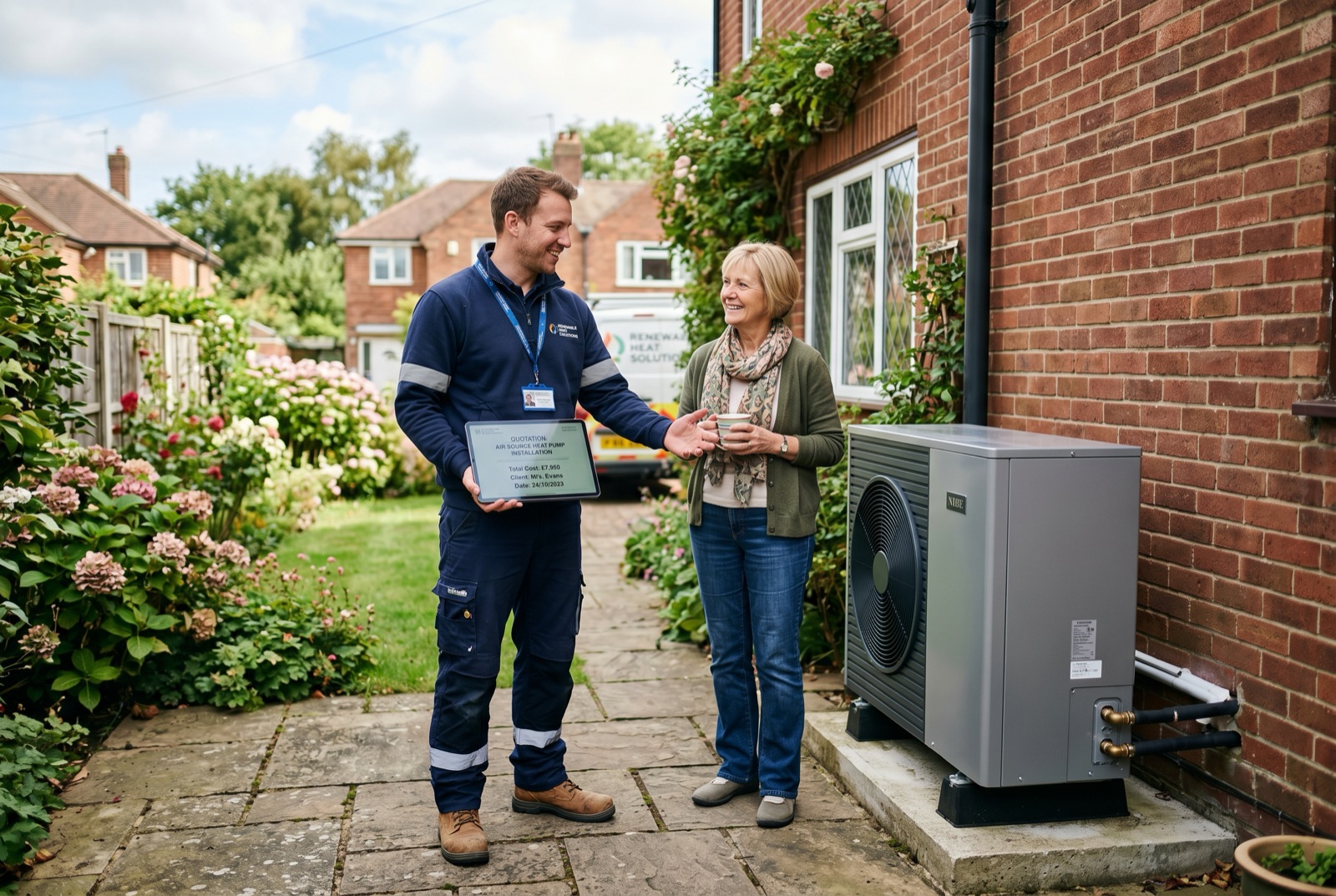
Once the survey data is gathered, the installer prepares a full system design: heat pump model and capacity, cylinder size, pipework layout, any radiator upgrades required, and the electrical supply needs. They also confirm eligibility for the Boiler Upgrade Scheme (BUS), which currently provides a grant of up to £7,500 toward an air source or ground source heat pump in England and Wales. A detailed written quotation typically follows within five to ten working days of the survey. Take time to compare at least two or three quotes — not just on price, but on the system design itself. The cheapest quote may specify an undersized unit or omit radiator upgrades that will be essential for efficiency.
Most air source heat pump installations fall under Permitted Development rights in England, Scotland, and Wales, meaning no formal planning application is required — provided the unit is not on a listed building, in a conservation area, or louder than 42 decibels at one metre. Your installer will confirm this before proceeding. Ground source systems, which involve burying collector loops in your garden or drilling a borehole, generally also sit within Permitted Development, but borehole drilling may require additional assessments and, in some cases, notification to the Environment Agency.
If your home's existing electrical supply is insufficient — typically anything below a 100-amp service — the installer will need to arrange an upgrade with your district network operator (DNO). This is the stage most likely to introduce unexpected delays: DNO response times vary considerably by region and can add two to six weeks or more to the overall timeline. Your installer should identify this requirement at the survey stage and initiate the DNO application as early as possible.
If you are applying for the Boiler Upgrade Scheme grant, your MCS-certified installer submits the application on your behalf through Ofgem's portal after you have accepted the quote. The application requires proof of a valid EPC with no outstanding loft or cavity wall insulation recommendations — if your EPC has such recommendations, you need to address them (or obtain an updated EPC showing they are not applicable) before the grant can be approved. Ofgem's current processing times for BUS applications typically run between two and four weeks, though this can vary. The grant is approved before installation begins, not paid until after the system is commissioned and the MCS certificate is issued.
Before the heat pump unit itself is installed, a number of preparatory tasks often need to happen. These may include replacing an existing hot water cylinder with a larger, well-insulated unit (heat pump cylinders are typically 200 to 300 litres), upgrading radiators in rooms where existing ones are too small to work at the lower flow temperatures heat pumps produce, adding or extending underfloor heating circuits, and running a new electrical supply to the intended outdoor unit location. Depending on scope, this preparatory phase can take one to three days on a separate visit, or it may be combined with the main installation week.
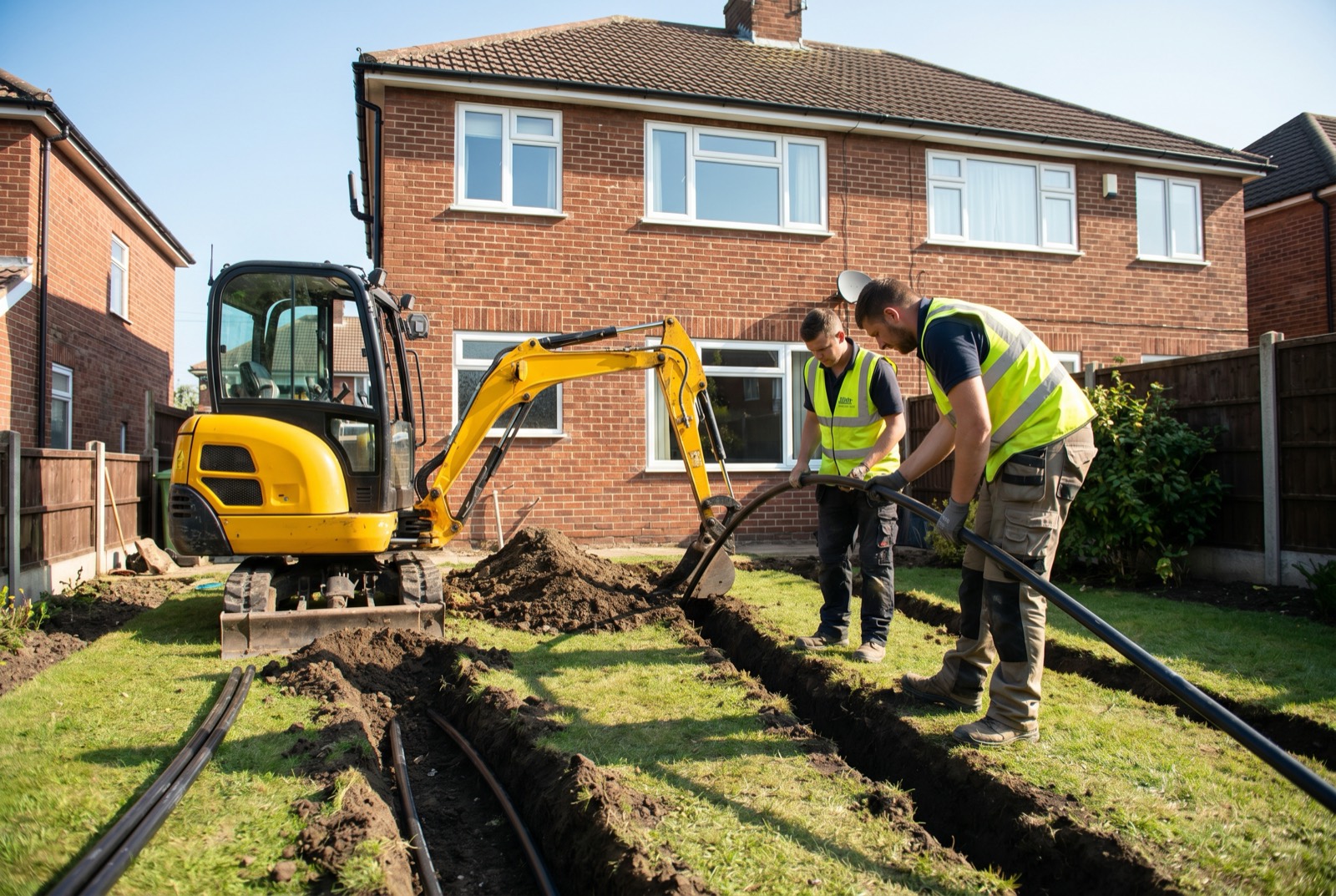
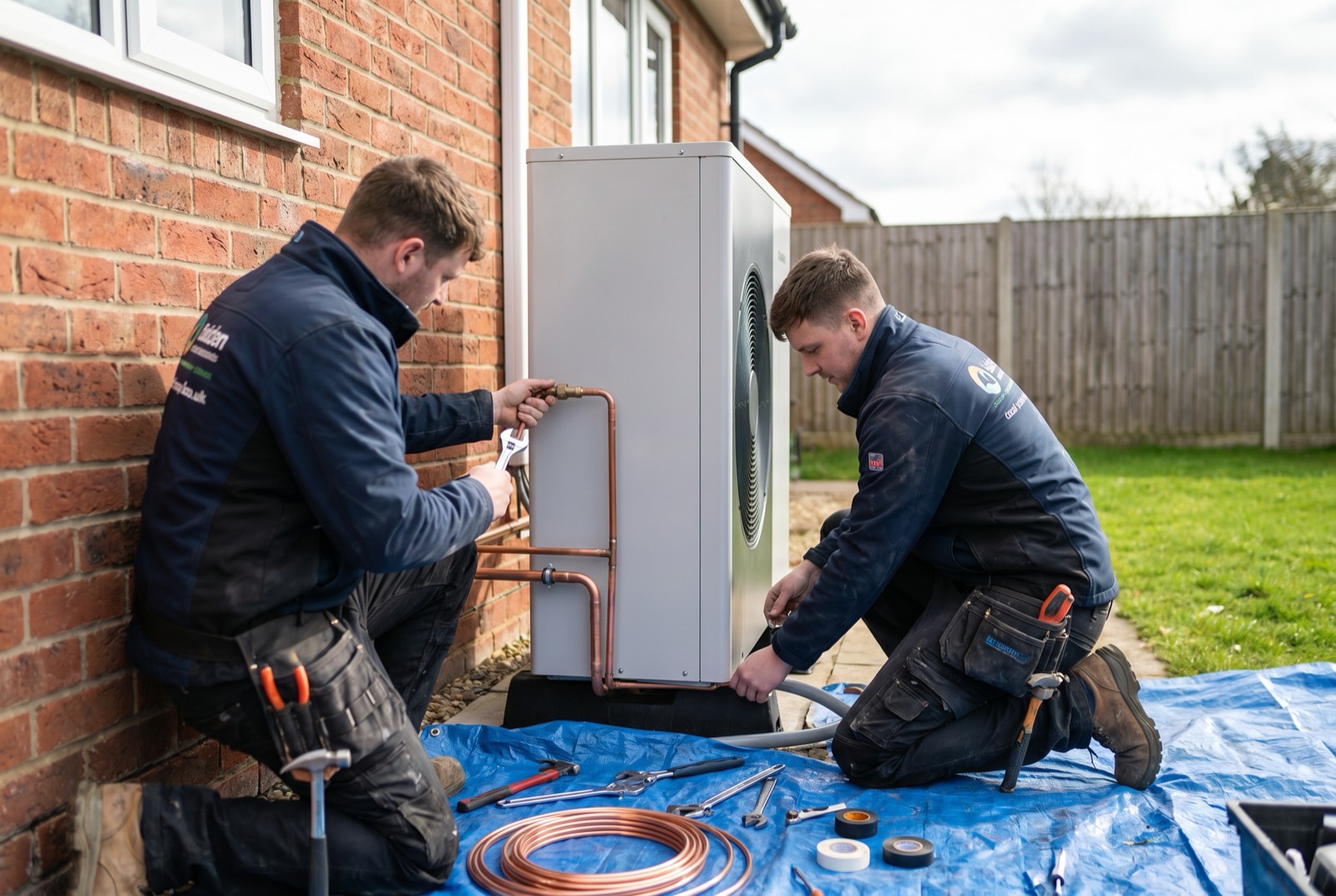
The physical installation of a typical air source heat pump takes two to five days for a competent crew of two engineers. Day one usually covers positioning and fixing the outdoor unit, running refrigerant pipework through the wall, and installing the indoor unit or connecting pipework to the cylinder. Subsequent days cover cylinder connections, control wiring, system filling and pressurisation, and integration with any smart controls or thermostats. Ground source systems take longer — a horizontal ground loop requires a significant amount of garden disturbance and can take a week or more, while a borehole installation adds the drilling phase, which alone may take one to three days depending on geology and depth required.
During installation, you will normally have hot water interrupted for part of the process but should retain some form of heating unless the old boiler has already been decommissioned. A good installer will discuss this with you in advance and plan around it, particularly in colder months.
Commissioning is the process of starting the system, verifying that all components operate correctly, setting flow temperatures and control schedules, and checking refrigerant pressures. Under MCS standards, commissioning must be carried out by a suitably qualified engineer and documented before the MCS certificate is issued. This certificate is what triggers the Boiler Upgrade Scheme payment to the installer and confirms to your energy supplier that you are eligible for the Smart Export Guarantee if you also have solar PV. Handover typically takes two to three hours: the engineer walks you through the controls, explains how to read the system's performance data, and leaves you with all documentation. Expect a follow-up call or visit from a reputable installer within the first heating season to check the system is performing as designed.
- DNO electrical upgrade requests are the single most common cause of significant delay — ask your installer to submit the application immediately after your quote is accepted.
- EPC recommendations for insulation must be resolved before a BUS grant can be approved. Checking your EPC early avoids a last-minute scramble.
- Installer availability varies by region and season. In areas with high demand for heat pump engineers, lead times from survey to installation can exceed three months.
- Borehole drilling for ground source systems depends on access, ground conditions, and contractor scheduling — factor in an additional two to four weeks compared with an air source installation.
- Homes requiring significant radiator upgrades or new underfloor heating circuits in multiple rooms will need more preparation time — this is best identified at survey stage, not partway through installation.
- Choosing an MCS-certified installer from the outset avoids rework: systems installed by uncertified contractors are not eligible for the BUS grant and may not meet Building Regulations requirements.
If you are planning to have a heat pump installed before a specific date — the end of a tenancy, a house sale, or the start of the next heating season — work backwards from that date and allow a minimum of ten to twelve weeks from first contact. Starting the process in spring or early summer gives you the widest choice of installers and avoids the autumn rush. A free home assessment from an MCS-certified installer is the right starting point: it costs you nothing, gives you an accurate picture of what your home needs, and puts a realistic timeline on the table before you commit to anything.