Ground source heat pumps (GSHPs) are one of the most efficient ways to heat a home in the UK. By drawing on the stable, low-grade warmth stored in the ground beneath your garden or land, they can deliver several units of heat for every unit of electricity they consume. They are quiet, long-lived, and — with the right home and the right installer — a genuinely compelling alternative to a gas boiler. This guide explains how the technology works, what it costs, and what you need to know before committing.
How a Ground Source Heat Pump Works
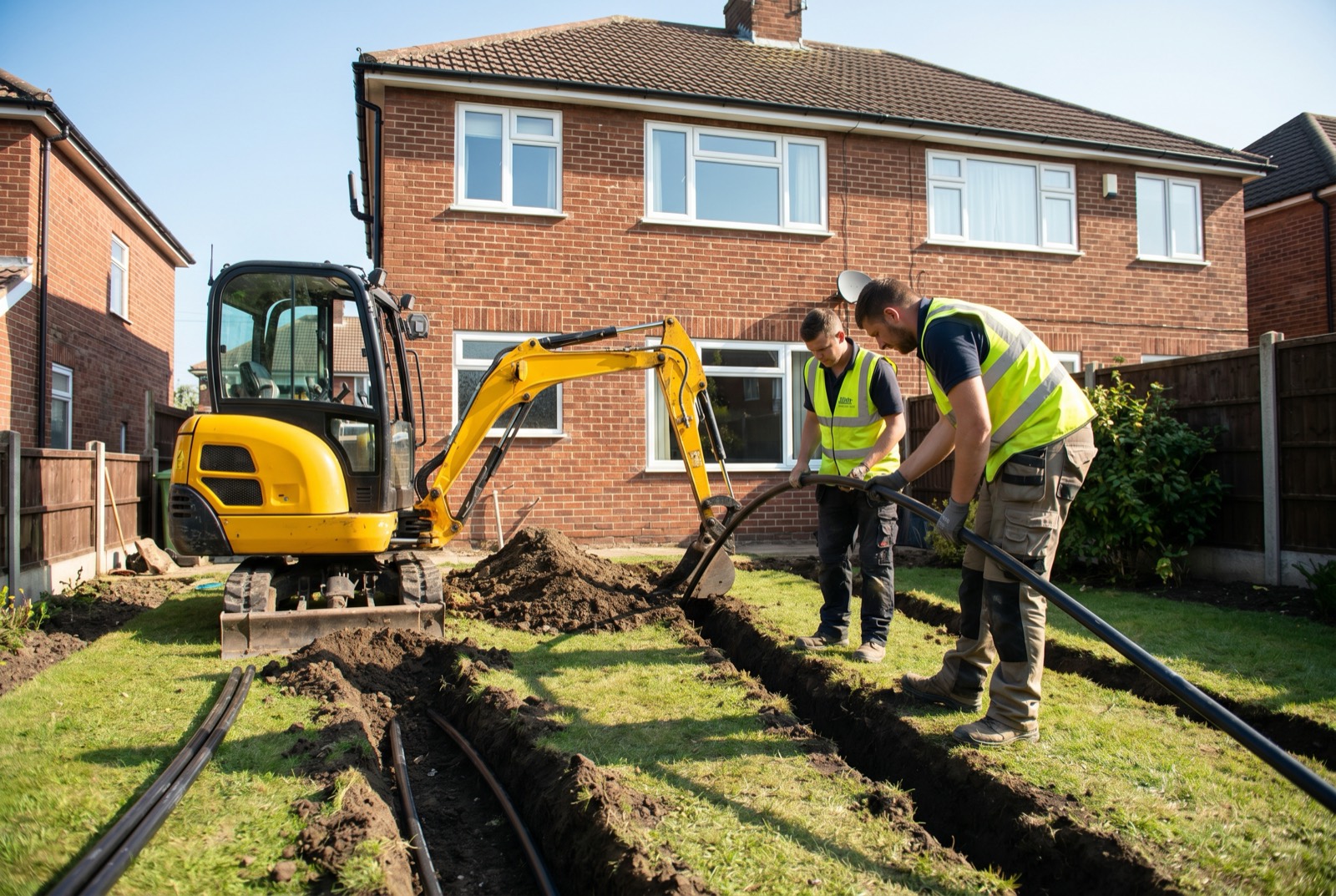
The core principle is the same as a refrigerator, running in reverse. A mixture of water and antifreeze circulates through a network of pipes buried in the ground — the ground loop. At depths of roughly 1–2 metres (horizontal loops) or 50–150 metres (vertical boreholes), the ground maintains a near-constant temperature of around 8–12°C year-round in the UK, regardless of what is happening above the surface. The fluid in the loop absorbs this low-grade heat and carries it back to a heat pump unit installed inside the house.
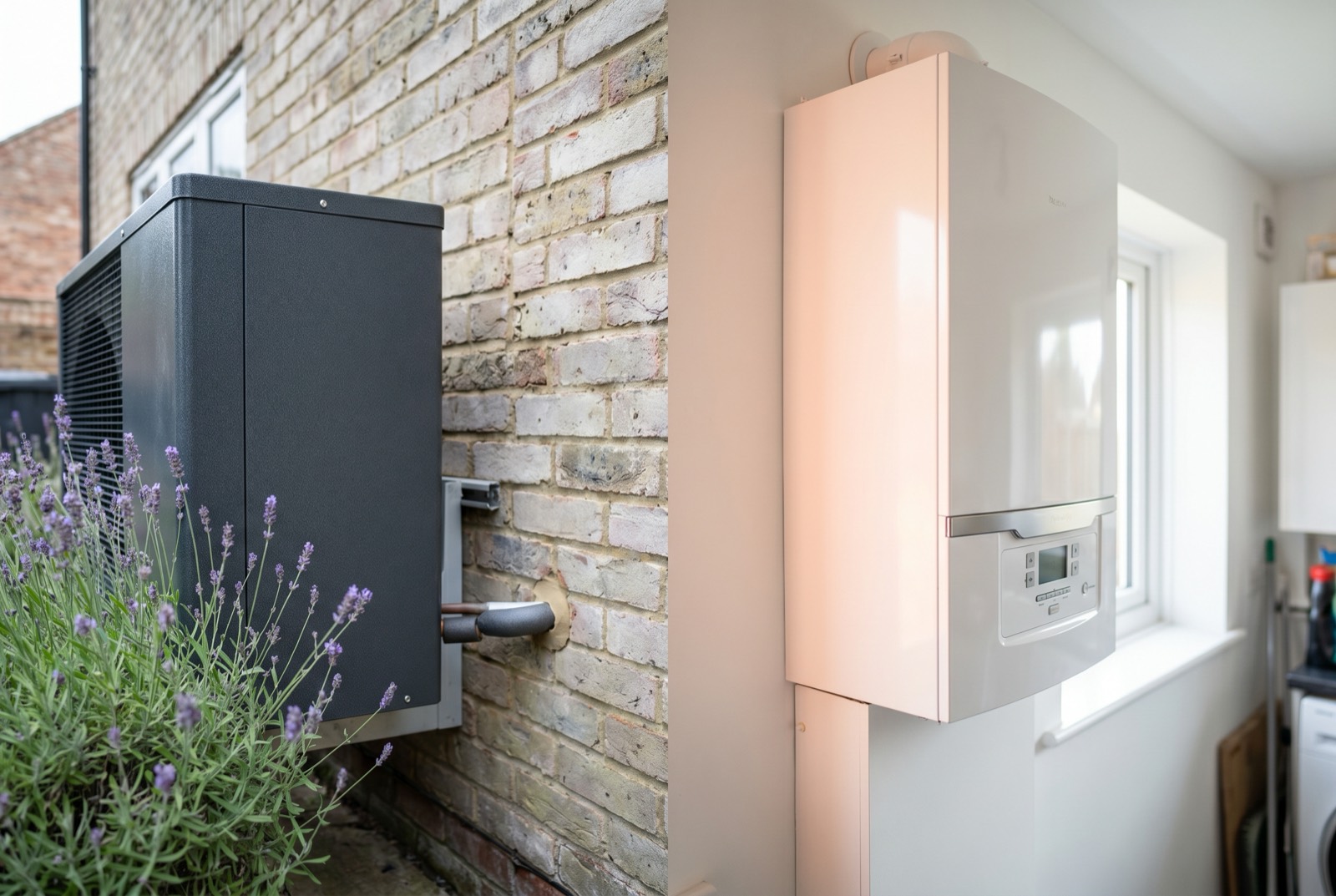
Inside the unit, a refrigerant circuit upgrades the temperature through compression — the same physical process that makes a bicycle pump hot when you use it. The refrigerant passes through a heat exchanger that transfers the elevated heat into your home's central heating and hot water system. The ground loop fluid, now slightly cooler, returns underground to absorb more heat and repeat the cycle.
Horizontal Loops vs Vertical Boreholes
The choice between a horizontal ground loop and a vertical borehole depends on the land available at your property and its geology.
- Horizontal loops are laid in trenches roughly 1–2 metres deep across a large area of garden. A typical family home may need 400–800 square metres of undisturbed land. Installation is less expensive than drilling, but the land cannot be built on afterwards (though it can be used as a lawn or planted with shallow-rooted vegetation).
- Vertical boreholes are drilled straight down, typically 50–150 metres per borehole, with one or more boreholes per installation. They suit smaller plots or urban sites where land area is the constraint. Drilling is more specialised and costs more, but the surface footprint is minimal.
- Slinky loops are a variation of horizontal installation where the pipe is coiled to increase the heat-exchange length within a shorter trench — useful on moderately sized plots.
- The geology of your site matters: dense, moist, or water-saturated ground transfers heat more readily than dry sandy soil, which affects the length of loop required and the efficiency of the final system.
What Does a Ground Source Heat Pump Cost?
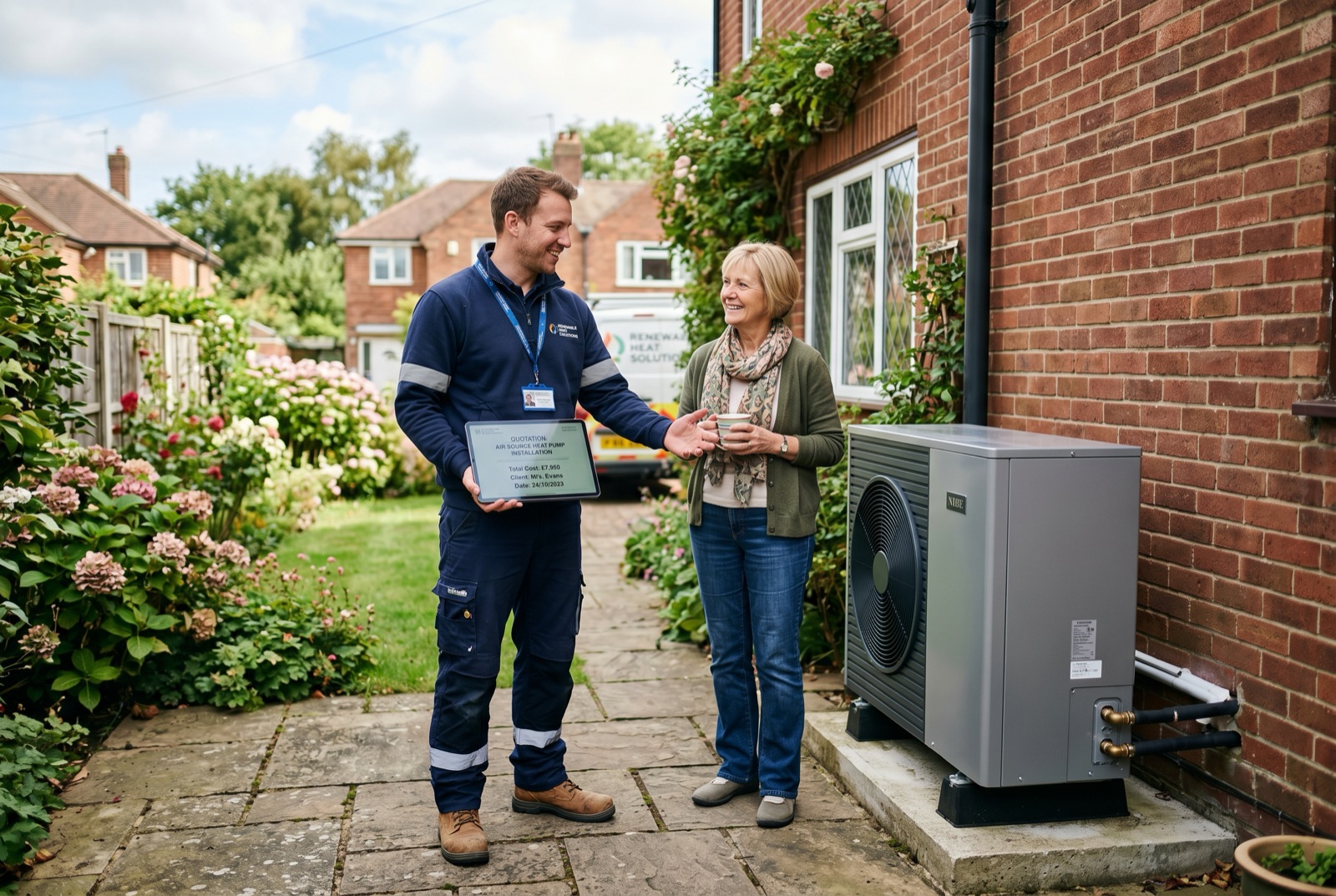
GSHPs are among the higher-capital-cost heating options, primarily because of the groundworks or drilling involved. What supply and installation comes to for a domestic property depends on the size of the home, the heat demand, the type of ground loop, and regional labour rates. Horizontal loops are generally cheaper; vertical boreholes push costs upward. Because every site differs, your installer will provide a site-specific quote after a heat loss survey and ground assessment rather than a figure off the shelf.
Running costs depend heavily on the system's Coefficient of Performance (COP) — the ratio of heat output to electricity input. A well-designed GSHP in a well-insulated home can achieve COPs of 3.5 to 4.5 or higher under real-world conditions, meaning it produces 3.5–4.5 kWh of heat per kWh of electricity consumed. Whether this translates into lower bills compared with your current heating system depends on the price you pay for electricity versus gas or oil, and on how well-matched the system is to your home.
The Boiler Upgrade Scheme Grant
The Boiler Upgrade Scheme (BUS) is the UK government's primary mechanism to help homeowners in England and Wales offset the upfront cost of low-carbon heating. As of the current scheme rules, eligible ground source heat pump installations can receive a grant of up to £7,500, applied as a discount off the purchase price — you never handle the money directly; your MCS-certified installer claims it on your behalf and deducts it from their invoice.
To qualify, the property must be in England or Wales, have a valid Energy Performance Certificate (EPC) with no outstanding recommendation to install loft or cavity wall insulation, and the installer must hold MCS (Microgeneration Certification Scheme) certification for the specific technology. Scotland has its own support mechanisms through Home Energy Scotland, which are worth investigating separately if you are based there.
VAT Relief on Heat Pump Installations
Ground source heat pumps installed in existing residential properties in the UK are currently subject to 0% VAT under the government's relief on energy-saving materials. This applies to both the equipment and the installation labour, and represents a meaningful saving on a higher-cost technology. The zero-rate applies to qualifying measures in existing homes; always confirm eligibility with your installer, as rules can change.
Is Your Home Suitable for a GSHP?
Ground source heat pumps are not universally suitable, and an honest assessment of your property is essential before proceeding. The technology works best in homes that meet certain conditions.
- Good insulation: heat pumps deliver water at lower temperatures than gas boilers (typically 35–55°C flow temperature versus 65–75°C for a boiler). This works well in a well-insulated home but may leave an older, poorly-insulated property feeling cold. Improving insulation before or alongside a heat pump installation is often worthwhile.
- Adequate heat emitters: underfloor heating is the ideal partner for a GSHP because its large surface area works efficiently at low flow temperatures. Existing radiators can work too, but may need to be oversized or replaced in some rooms.
- Sufficient land or drilling access: horizontal loops need a large garden free from underground services and significant tree roots; boreholes need drilling rig access, typically through a gate or gap at least 2.5–3 metres wide.
- Oil, LPG, or electric heating as the current fuel: the economics of switching are generally most compelling when replacing expensive fuels. Switching from mains gas is increasingly viable but the payback period depends on tariff movements.
- A stable electricity supply: GSHPs run on electricity, so properties with frequent supply issues or very high electricity tariffs warrant careful modelling before committing.
Choosing an MCS-Certified Installer
MCS certification is not a marketing badge — it is a condition of accessing the Boiler Upgrade Scheme grant, and it means the installer has been independently assessed against industry standards for product selection, system design, installation quality, and commissioning. An MCS-certified installer will carry out a full heat loss calculation for your home, size the system correctly, and provide you with a Performance Estimate so you know what to expect before work begins. Be cautious of any quote that skips the heat loss survey or promises outcomes that seem too good to be true. A properly designed system, installed by a qualified engineer, should perform reliably for two decades or more with minimal maintenance — typically an annual service check, similar to a boiler.
If you are considering a ground source heat pump, the most useful first step is a free home assessment with a registered installer. They can evaluate your land or borehole options, carry out a heat loss survey, advise on whether your existing radiators or underfloor heating is compatible, and confirm your eligibility for the Boiler Upgrade Scheme grant. Use our directory to find MCS-certified ground source heat pump installers in your area — all listed companies have been verified against the MCS register.