Two objections come up almost every time someone in the UK considers a heat pump: "They don't work when it gets cold" and "My house is too old for one." Both claims are understandable — they circulate widely online and in the press — but neither holds up against what modern equipment actually does or what installers are achieving in real UK homes. This article sets out the facts so you can make an informed decision rather than one based on myths.
A heat pump does not generate heat by burning fuel. Instead, it moves heat that already exists in the air, ground, or water outside your home into your heating system — the same principle a refrigerator uses in reverse. The key measure of efficiency is the Coefficient of Performance (COP): a COP of 3 means the pump delivers 3 units of heat for every 1 unit of electricity consumed. This ratio is why heat pumps can be significantly cheaper to run than direct electric heating and, depending on your tariff, competitive with gas.
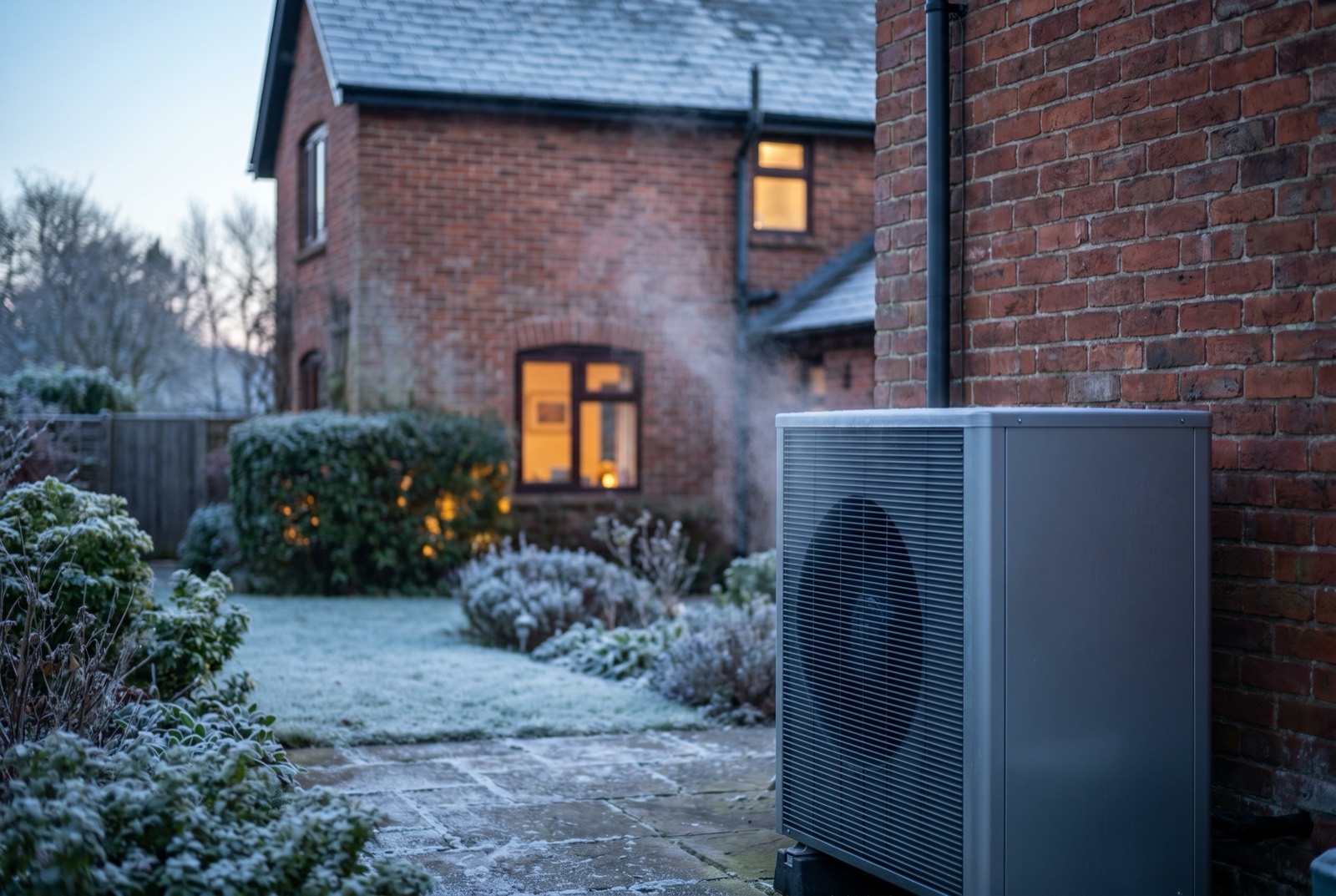
The concern that heat pumps stop working in cold weather stems from older or poorly specified systems. Current air-source heat pumps from leading manufacturers are rated to operate reliably down to around -20°C or -25°C. Even at 0°C — a typical cold UK night — a well-specified air-source unit continues to extract useful heat from outdoor air, because air at freezing point still contains a substantial amount of thermal energy. The UK rarely sees prolonged periods below -10°C, so the climate here is, if anything, well suited to the technology.
Efficiency does fall as outdoor temperatures drop, and that is worth acknowledging honestly. A unit that achieves a COP of 3.5 on a mild autumn day might deliver a COP closer to 2.0 on a hard frost night. That is still more efficient than a direct electric heater, and a correctly sized system is designed to handle peak demand. The answer to low-temperature performance is proper sizing and commissioning by a qualified installer — not avoiding the technology altogether.
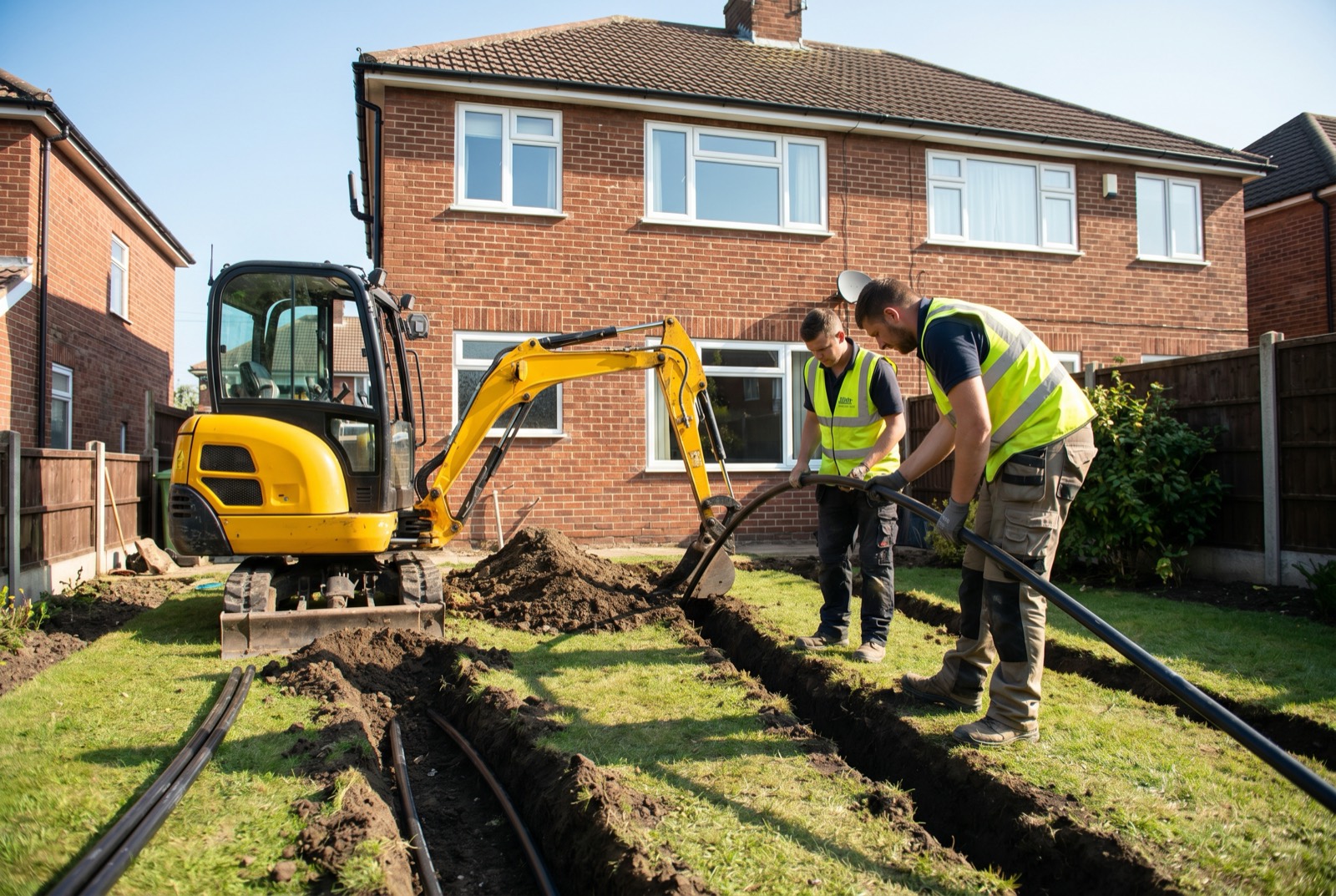
Ground-source heat pumps draw energy from the ground rather than the air. At a depth of around 1–2 metres, ground temperature in the UK remains broadly stable — typically between 8°C and 12°C year-round — regardless of what is happening above the surface. This stability means ground-source systems maintain more consistent efficiency through winter and are inherently less affected by outdoor air temperature. They require land for ground loops (or a borehole), which makes them more suitable for rural or semi-rural properties with sufficient outdoor space.
This is where the most damaging myth lives. The assumption is that heat pumps only work in new-build, heavily insulated homes. In reality, heat pumps have been installed in Victorian terraces, Edwardian semis, and 1930s bungalows across the UK. The critical factor is not the age of the property — it is the heat loss, the radiator sizing, and the flow temperature required to heat each room adequately. An MCS-certified installer will carry out a heat loss calculation (to BS EN 12831) for every room before recommending or designing a system. This calculation is the foundation of every good installation.
- Insulation matters more than age: improving loft insulation, cavity or external wall insulation, and draught-proofing reduces the heat loss figure and means a smaller, cheaper heat pump is required.
- Radiator sizing can be adjusted: heat pumps run at lower flow temperatures (typically 35–55°C) than gas boilers (70–80°C). In practice, this often means upgrading to larger radiators in one or two rooms rather than replacing every radiator in the house.
- Underfloor heating is ideal but not essential: UFH works very well with heat pumps because it suits low flow temperatures, but many successful installations in older homes use radiators throughout.
- Hot water cylinders are usually needed: most heat pump systems use an unvented or thermal store cylinder. This is a straightforward upgrade and replaces the hot water tank many older homes already have.
- Existing pipework can often be reused: copper pipework in good condition is generally compatible; a qualified installer will assess this during the survey.
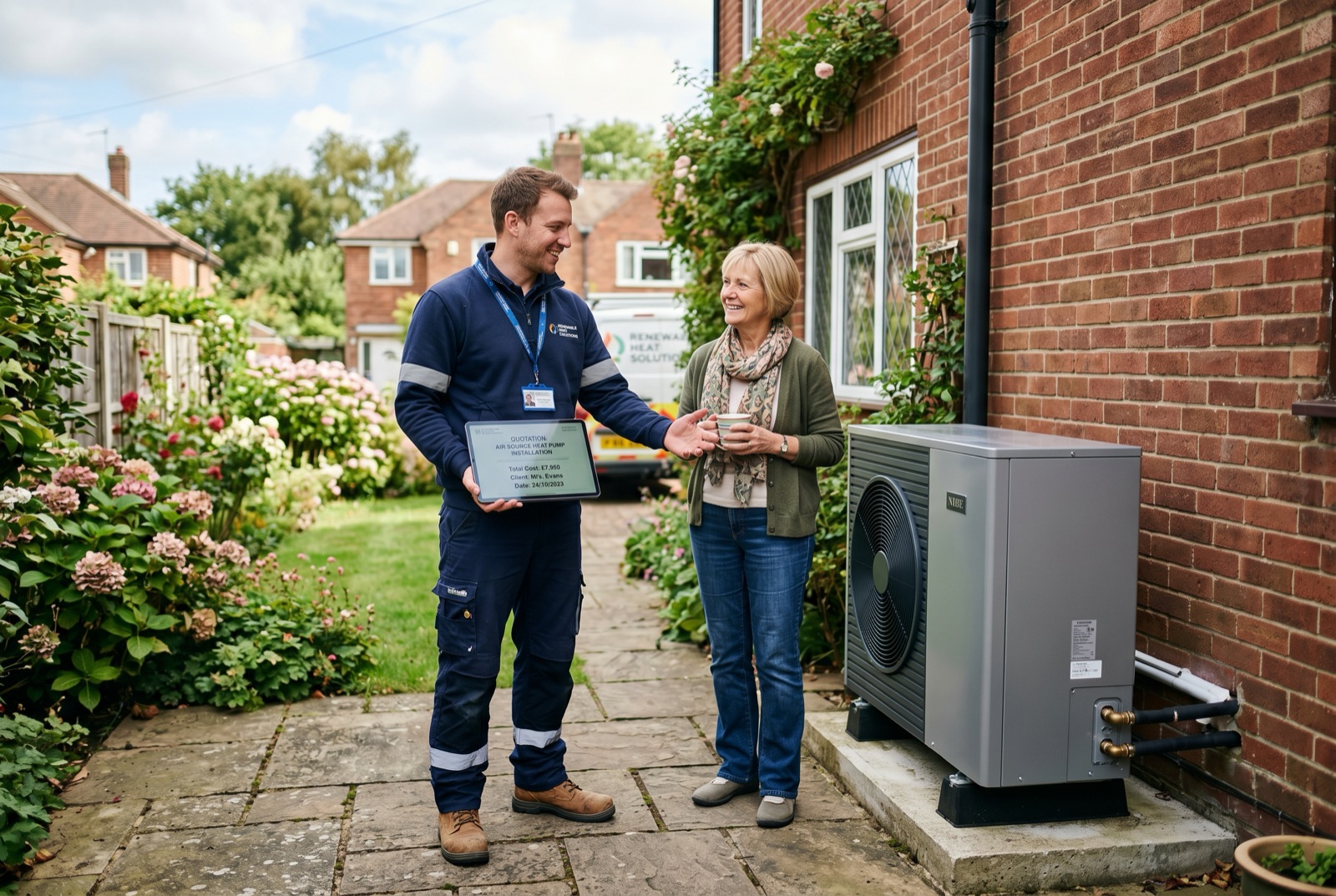
The single most important factor in whether a heat pump performs well — in cold weather, in an old house, or anywhere else — is the quality of the design and installation. Undersized units will struggle in cold snaps. Oversized units will cycle on and off inefficiently. Radiators that have not been checked against the new, lower flow temperature will leave rooms feeling cold. This is why MCS certification exists: it sets a mandatory standard for system design, installation practice, and commissioning. Only MCS-certified installers can apply for the Boiler Upgrade Scheme grant on your behalf, and the certification process requires them to demonstrate competency in heat loss calculations and system design — not just physical installation.
Better insulation and a heat pump are complementary investments, not competing ones. Reducing the heat loss of your home means the heat pump runs fewer hours per day to maintain a comfortable temperature, which lowers your electricity bill and extends the life of the equipment. If your home has uninsulated loft space or unfilled cavity walls, addressing those before or alongside the heat pump installation is usually the most cost-effective approach. The Great British Insulation Scheme may provide support for insulation costs depending on your household income and property EPC rating, and 0% VAT applies to a range of qualifying insulation measures.
Running costs depend on your current heating fuel, the efficiency of your heat pump (its Seasonal Coefficient of Performance, or SCOP, across a full year), and the electricity tariff you are on. Specialist time-of-use tariffs designed for heat pump users can significantly reduce operating costs by shifting electricity consumption to off-peak periods. As a broad indication, a well-designed heat pump system in a reasonably insulated home typically delivers a SCOP of between 2.5 and 3.5 over a UK heating season. An MCS-certified installer is required to provide you with a projected SCOP estimate as part of the MCS documentation at commissioning.
- Boiler Upgrade Scheme (BUS): up to £7,500 off an air-source or ground-source heat pump in England and Wales. Applied for by your MCS-certified installer on your behalf.
- 0% VAT: the installation of qualifying energy-saving measures, including heat pumps, is currently subject to 0% VAT, reducing upfront costs.
- Home Energy Scotland Grant: separate grant and loan support is available for Scottish households via Home Energy Scotland.
- Great British Insulation Scheme: may contribute to the cost of insulation upgrades that improve the effectiveness of a heat pump installation.
If you are wondering whether your home is suitable — regardless of its age or how cold your winters feel — the right starting point is a free, no-obligation assessment from an MCS-certified heat pump installer. A proper heat loss survey will give you specific numbers for your property rather than general assumptions. Use our directory to find MCS-certified installers in your area, compare their services, and request an assessment without any commitment to proceed.