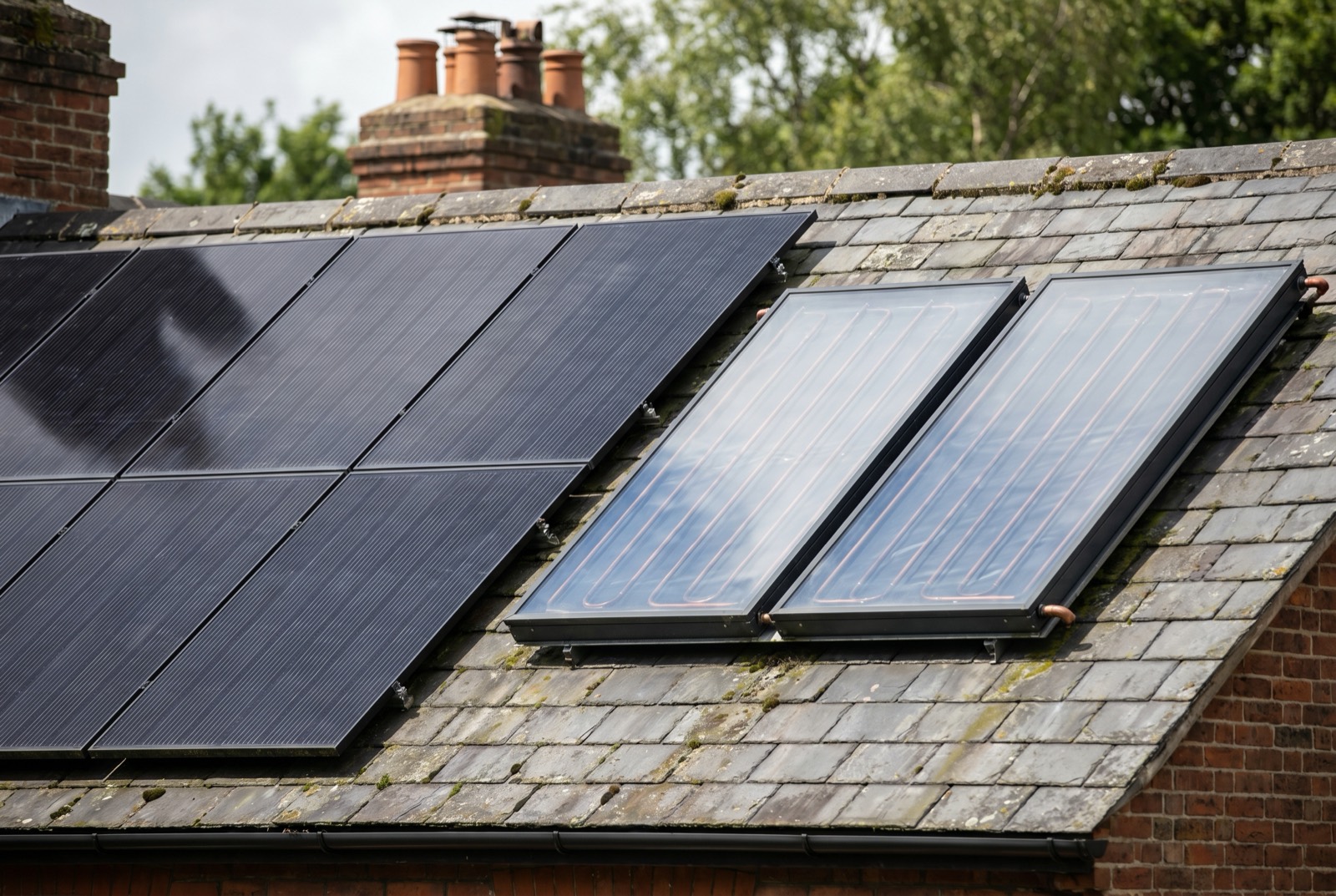
Both solar panels and solar thermal collectors sit on a south-facing roof and harvest energy from the sun, so it is easy to assume they are variations of the same thing. They are not. Solar photovoltaic (PV) panels convert sunlight into electricity that powers your lights, appliances and EV charger. Solar thermal collectors convert sunlight into heat that warms the water in your cylinder. The right choice depends on where your household spends most of its energy budget — and for many UK homes, that answer is less obvious than it first appears.
How Solar PV Works: Electricity From Sunlight
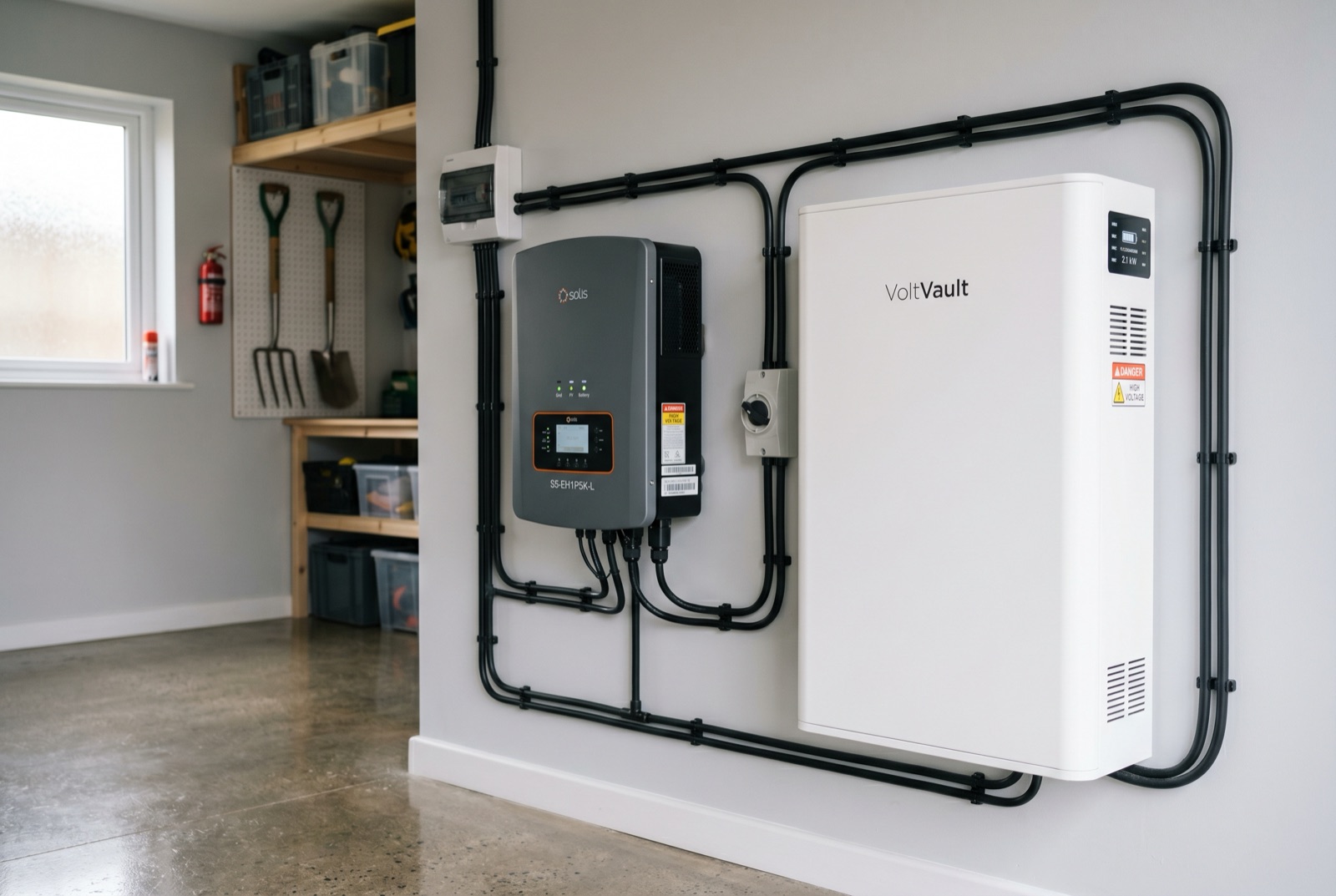
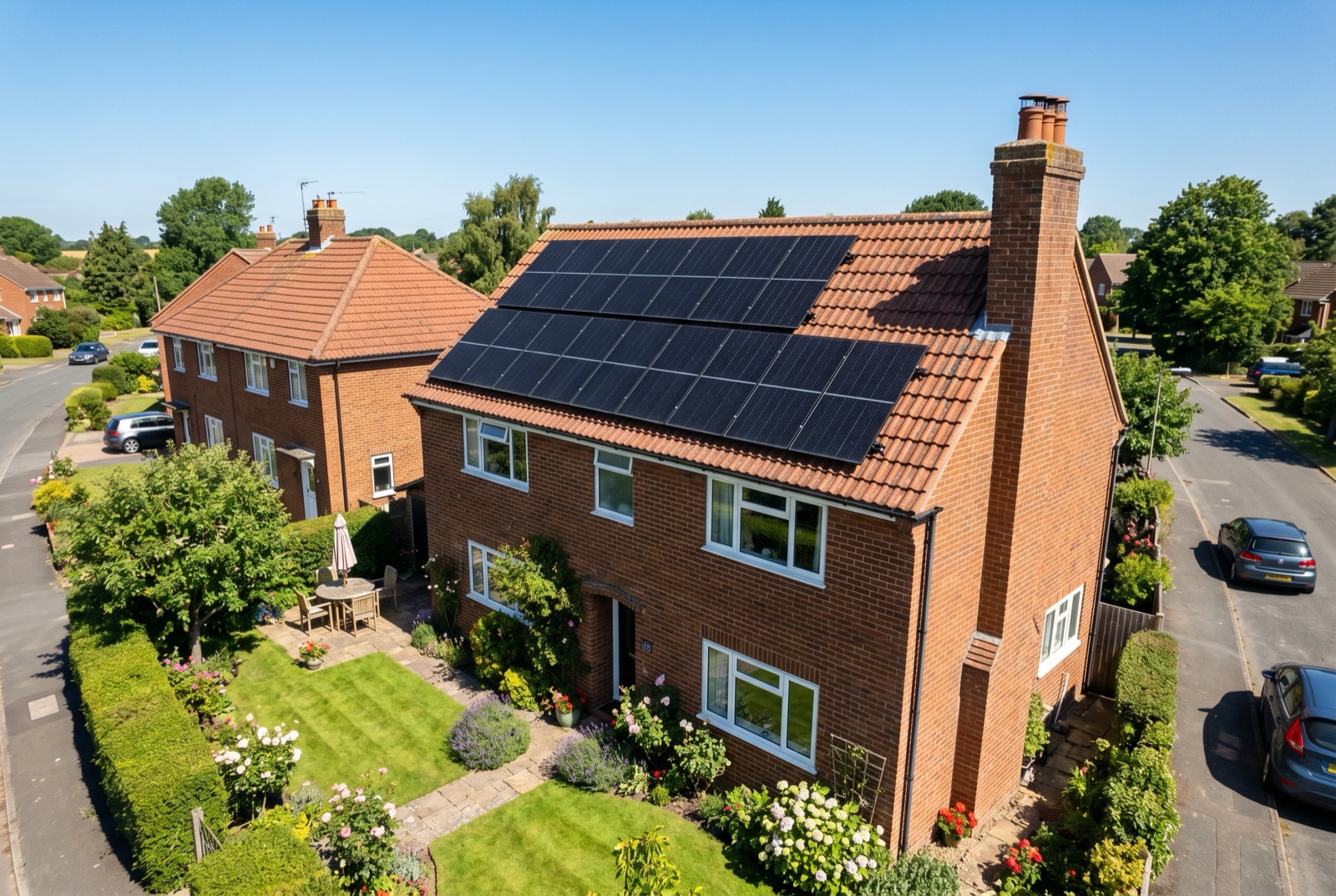
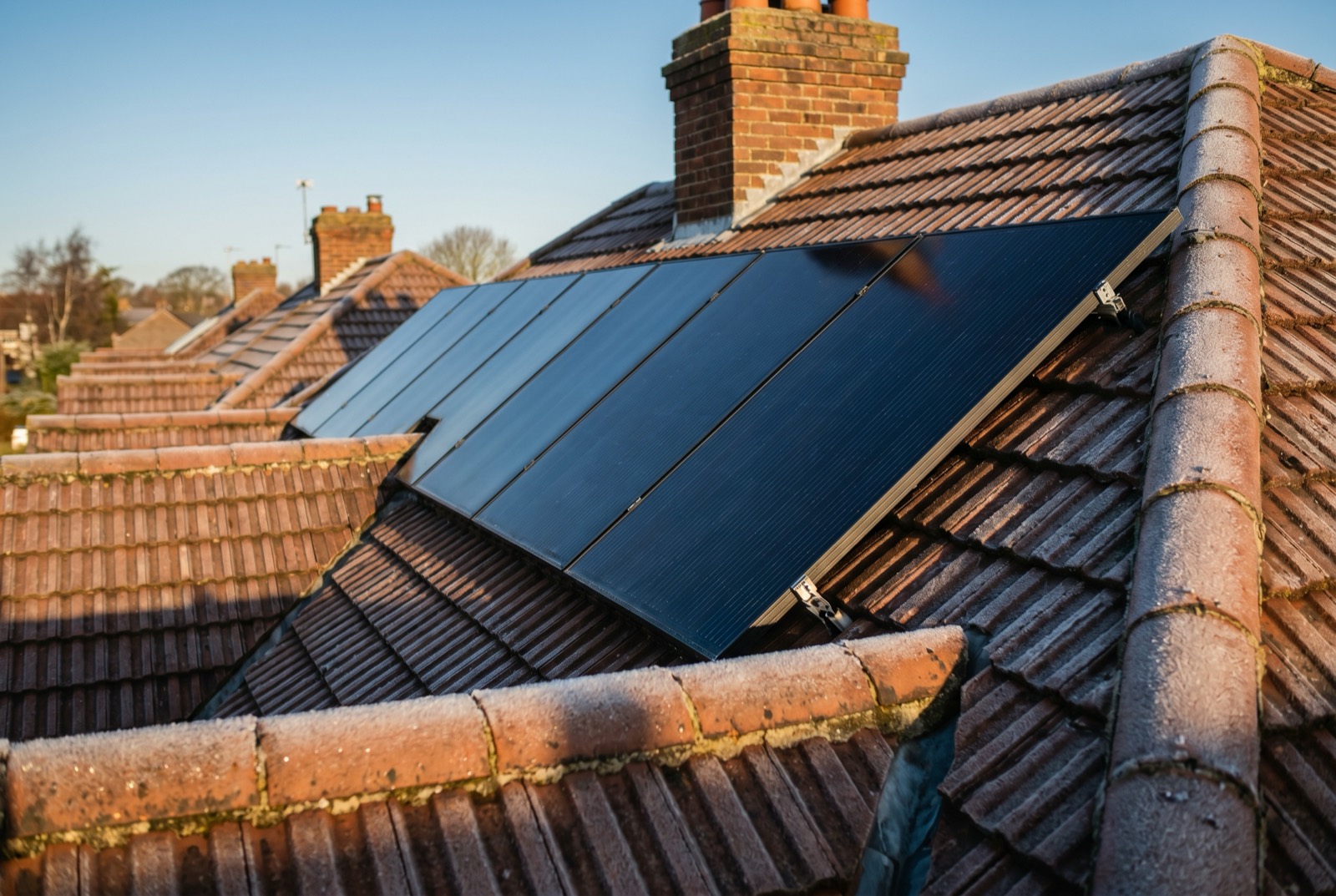
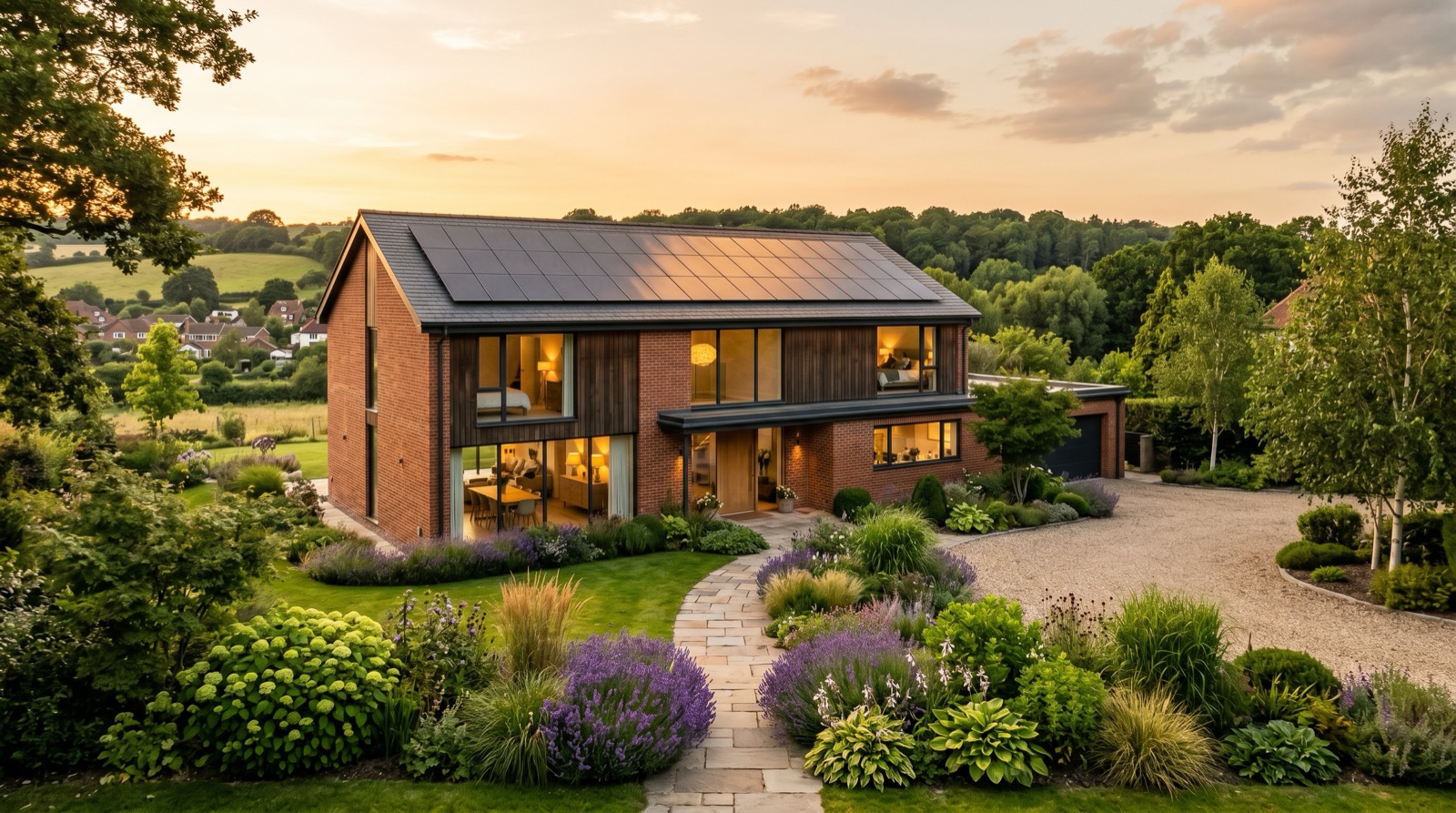
A solar PV system uses silicon cells — grouped into panels — to release electrons when light strikes them, producing direct current (DC) electricity. An inverter converts that to the alternating current (AC) your home runs on. Any electricity you generate but do not use immediately can be exported to the grid, earning you a payment under the Smart Export Guarantee (SEG), or stored in a battery for use after dark. A typical domestic installation is 3–5 kWp (kilowatt-peak) and covers a roof area of roughly 20–35 square metres. Output varies with season and cloud cover, but modern panels still generate meaningful power on bright overcast days, which matters in the UK climate.
How Solar Thermal Works: Heat From Sunlight
A solar thermal system uses roof-mounted collectors — either flat-plate panels or evacuated tubes — to absorb the sun's heat and transfer it to a fluid that circulates to a hot-water cylinder. The system typically pre-heats water before your boiler or immersion heater tops it up to the temperature you need. It does not generate electricity and cannot power appliances. Because it performs a single, defined job — producing domestic hot water — it does that job very efficiently: a well-sized solar thermal system can provide roughly 50–70 % of a household's annual hot-water demand, depending on usage and location.
The Core Difference: Where Does Your Energy Bill Come From?
In a typical UK home, space heating and hot water together account for around 80 % of total energy use, with hot water alone representing a meaningful slice of that. Electricity for lighting and appliances makes up most of the rest. The right solar technology depends on which share of your bill you want to address most directly.
- High electricity consumption — a home with an EV, a heat pump, or a home office running all day — benefits most from solar PV, because you offset expensive imported electricity unit-for-unit.
- High hot-water demand — large families, homes with a hot-water cylinder, or properties where the shower and bath run constantly — benefit most from solar thermal, because it directly displaces the gas or electricity used to heat water.
- Homes already on a heat pump can use solar PV to power the heat pump itself, dramatically reducing running costs.
- Homes on mains gas with a conventional combi boiler get limited benefit from solar thermal, because a combi heats water on demand rather than from a stored cylinder — most solar thermal systems need a cylinder to store pre-heated water.
Typical Costs: What to Budget in the UK
Both technologies currently attract 0 % VAT on supply and installation for residential properties in Great Britain, which meaningfully reduces the upfront cost. Beyond that, prices vary by system size, roof access, and installer.
- Solar PV (3–4 kWp, supply and installation): the core cost, before any battery is added.
- Add a home battery (5–10 kWh): increases the total, with capacity the main driver.
- Solar thermal (flat-plate, twin-panel, supply and installation): generally one of the cheaper options.
- Evacuated-tube collectors (higher efficiency, suits smaller roof space or shadier sites): cost more than flat-plate panels.
- Every job is quoted individually. Your installer's survey will account for scaffolding, roof type, cylinder compatibility and local labour rates to give an accurate figure.
Grants and Financial Incentives Available Right Now
There is no standalone government grant for solar PV or solar thermal in England, Wales or Scotland at the time of writing — but two financial mechanisms still reduce the cost or improve the payback meaningfully. The Smart Export Guarantee (SEG) requires licensed electricity suppliers to pay you for surplus solar electricity you export to the grid; rates are set by individual suppliers and vary, so it pays to compare tariffs before commissioning your system. The 0 % VAT rate on qualifying energy-saving measures — including solar PV panels, solar thermal collectors and associated equipment — applies across Great Britain and reduces the effective purchase price compared with standard 20 % VAT. In Scotland, the Home Energy Scotland Grant and Loan scheme can provide additional support; check directly with Home Energy Scotland as eligibility and available funding change periodically.
Which System Suits Which Type of Home?
- Family home with high hot-water use and a gas boiler with a hot-water cylinder: solar thermal is likely to deliver the fastest payback on your heating bill.
- Home with a heat pump (air source or ground source): solar PV to power the heat pump is a powerful combination — the two technologies are designed to work together.
- Homeowner planning to buy an EV or already charging one at home: solar PV makes strong financial sense, as daytime charging can be met directly from the panels.
- Smaller property with modest hot-water use and moderate electricity consumption: solar PV tends to be the more flexible investment because its output serves every appliance in the home.
- Home with a combi boiler and no hot-water cylinder: solar thermal is not compatible without significant additional plumbing work; solar PV is the practical choice.
- Household with a very shaded south-facing roof or limited roof space: evacuated-tube solar thermal collectors can outperform flat-plate panels and standard PV in lower-light conditions.
Can You Have Both on the Same Roof?
Yes, and some households do. Solar PV and solar thermal can coexist on the same roof provided there is sufficient unshaded area for both. In practice, a standard semi-detached roof often has enough south-facing space for a modest PV array alongside a two-panel solar thermal collector. The two systems are entirely independent — separate plumbing, separate electrics — so there is no technical conflict. Whether the combined investment makes financial sense depends on your total roof area, your current energy bills, and the rate at which you currently use electricity versus hot water. A detailed survey from an MCS-certified installer is the only reliable way to assess this for your specific property.
Why MCS Certification Matters
MCS (Microgeneration Certification Scheme) is the industry quality standard for small-scale renewable energy in the UK. For solar PV, MCS certification is required to register for the Smart Export Guarantee — without it, your supplier will not pay you for exported electricity. For solar thermal, MCS certification demonstrates that both the product and the installer meet tested performance and safety standards. Choosing an MCS-certified installer also gives you access to the MCS consumer protection framework, which provides a route to redress if something goes wrong. All installers listed on Renovation Register hold current MCS certification.
If you are still unsure which technology suits your home, a free project assessment from a local MCS-certified installer is the most useful next step. An installer who works with both solar PV and solar thermal can survey your roof, review your energy bills, and give you an honest comparison of costs and savings for your specific situation — without any obligation to proceed.
Related on Renovation Register