Choosing the right installer is the single biggest decision in any home-energy project. A heat pump, solar array or battery system is only as good as the company that designs and fits it, and the gap between a careful, certified installer and a corner-cutting one can mean the difference between years of quiet, efficient running and a string of avoidable problems. The good news is that you do not need to be a technical expert to choose well. You need to know what to verify, what to ask, and which warning signs should make you walk away.
What MCS certification actually guarantees
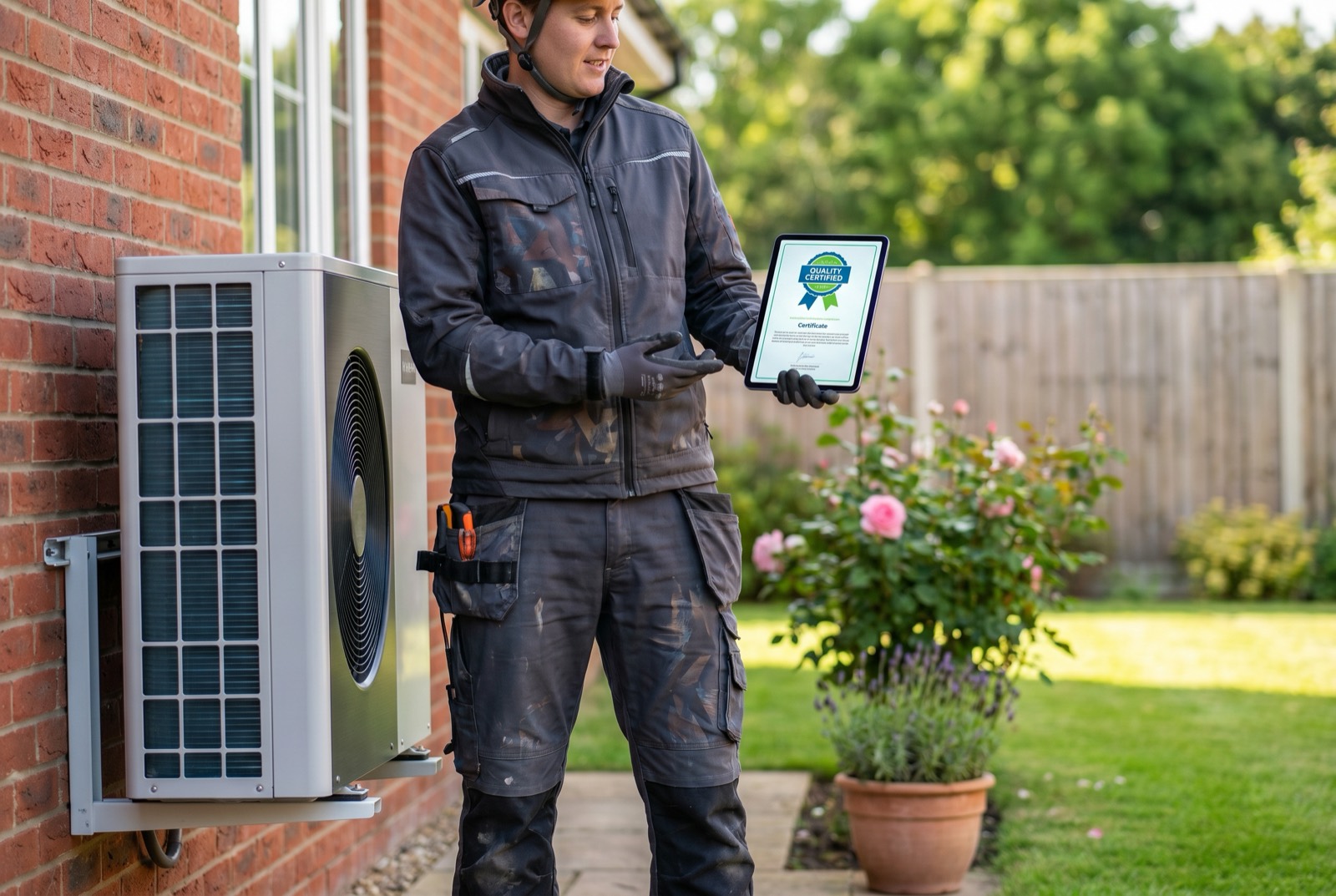
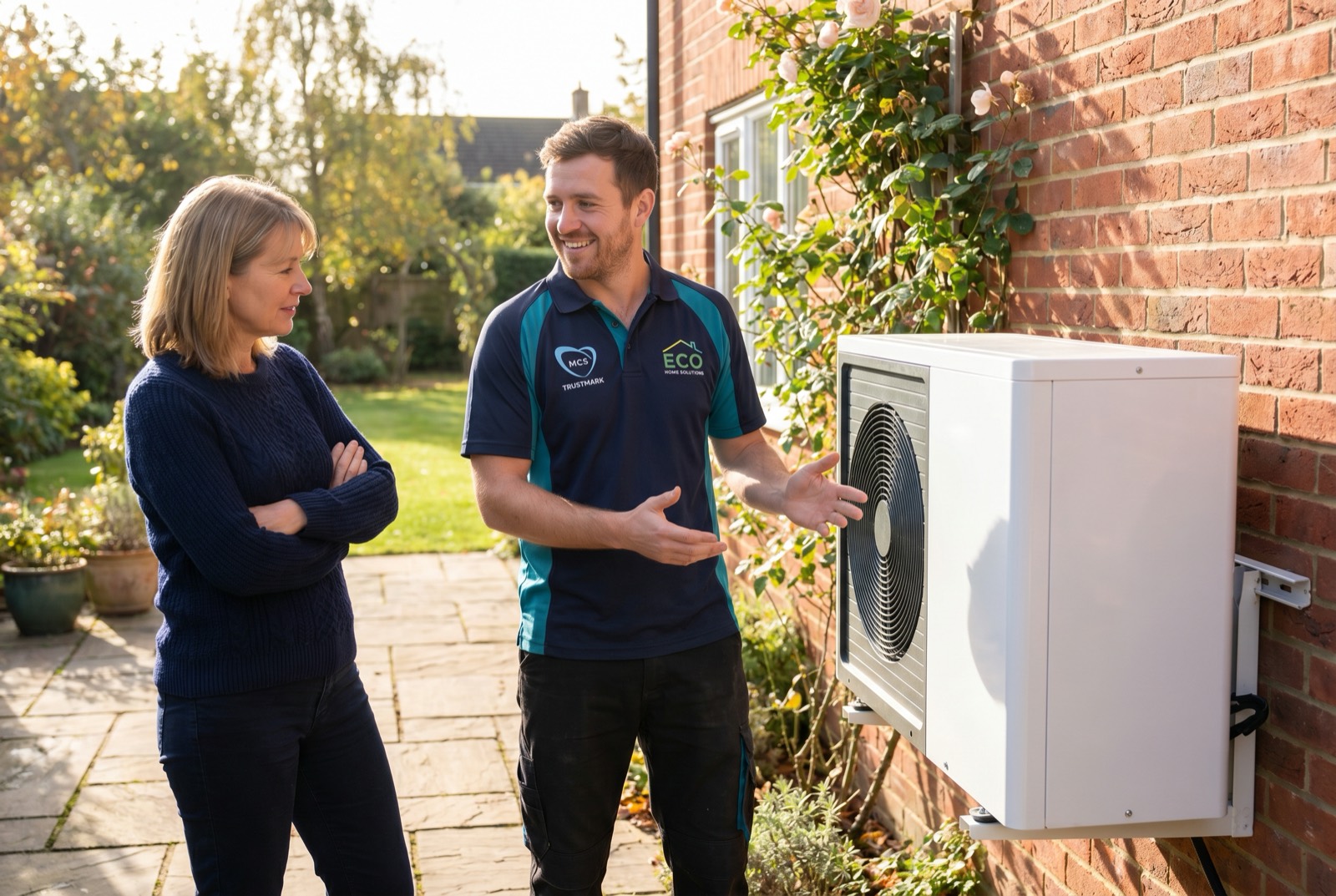
MCS stands for the Microgeneration Certification Scheme. It is an independent quality standard for small-scale renewable technologies such as heat pumps, solar PV, solar thermal and battery storage. When an installer is MCS-certified, it means their work and processes have been assessed against the scheme's standards, and that each completed installation is registered and issued with an MCS certificate.
Certification matters for more than reassurance. It is the gateway to the main financial support: you need an MCS-certified installer to access the Boiler Upgrade Scheme (up to £7,500 off an air- or ground-source heat pump in England and Wales), and MCS certification is also required to claim the Smart Export Guarantee on surplus solar you export to the grid. No certification, no grant, and in most cases no export payments either. It is worth being clear, though, about what MCS does not do: it is a quality and eligibility standard, not a guarantee that a particular firm will be the cheapest, the fastest, or the right fit for your home.
How to verify certification on the public register
Never take a logo on a website at face value. Anyone can copy an image; certification is what counts. The MCS public register at mcscertified.com lets you check any company for free. Search by the business name or certificate number and confirm the firm is currently certified for the specific technology you want fitted, because being approved for solar PV does not automatically mean a company is approved for heat pumps.
- Confirm the company name on the register matches the name on your quote and contract exactly.
- Check the certification covers the right technology — heat pump, solar PV, battery or insulation.
- Make sure the certification is active and current, not lapsed or pending.
- If a salesperson gives you a certificate number, look it up yourself rather than trusting a screenshot.
The questions to ask before you sign
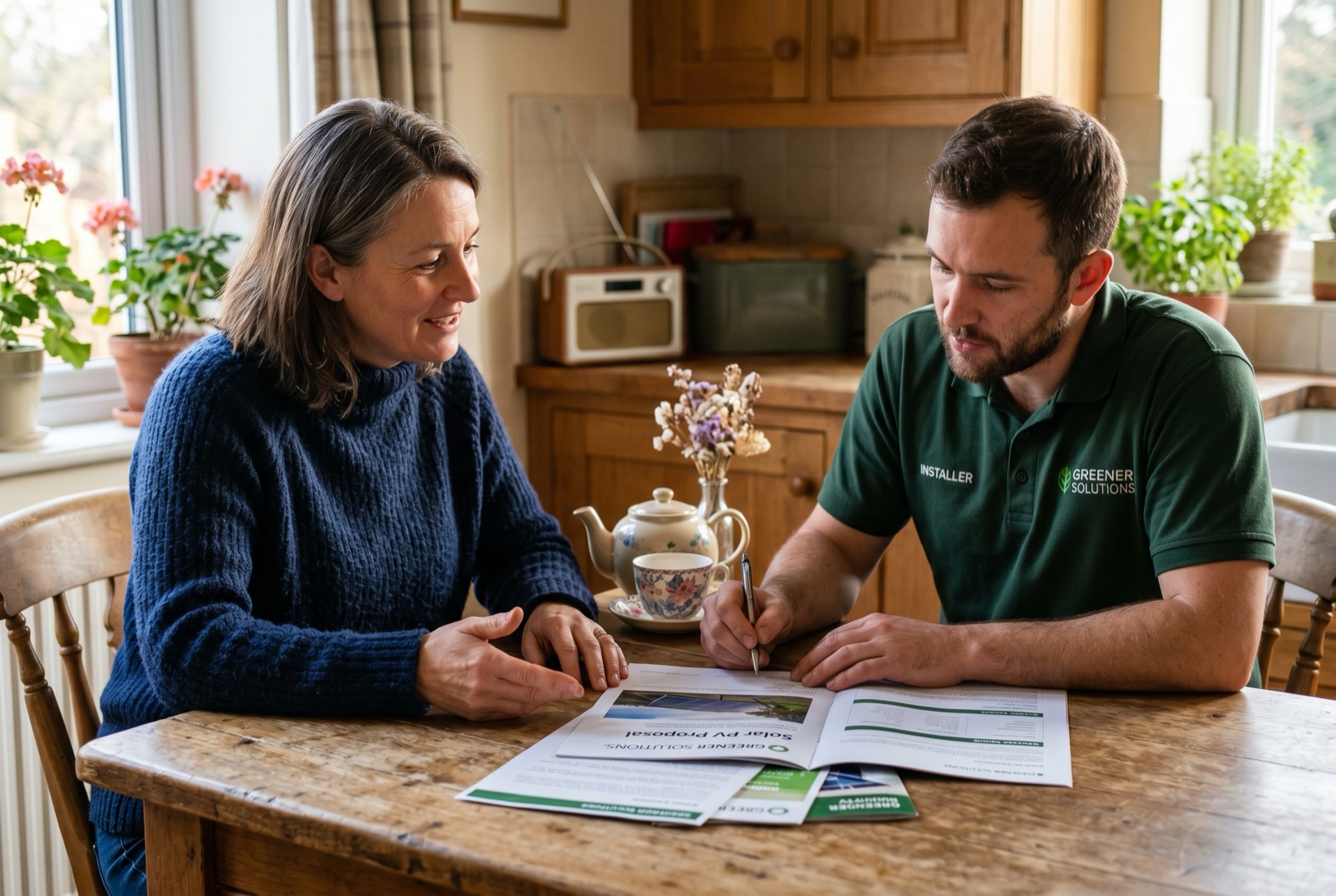
A trustworthy installer will welcome questions and answer them plainly. Vague or impatient responses are themselves a useful signal. Before you commit to anything, get clear answers in writing on the warranty, who carries out the survey, how any grant is handled, and what happens after the system is switched on.
On grants specifically, a good installer should apply the Boiler Upgrade Scheme upfront so the discount comes straight off your price, rather than leaving you to chase it. The scheme has no income or means test, but it does require a valid EPC with no outstanding loft or cavity insulation recommendations, so expect a competent installer to raise this early. They should also confirm that the 0% VAT on energy-saving materials, which applies UK-wide until 31 March 2027, is already reflected on your invoice.
Red flags to walk away from
Most reputable installers are straightforward to deal with, but high-pressure sales tactics still exist in this market. Treat the following as serious warning signs, and never let urgency rush you into signing.
- Pressure selling — 'today only' discounts, a price that drops sharply if you sign on the spot, or repeated calls to push you to commit.
- No proper written survey — a quote produced from a phone call, a satellite image or a five-minute doorstep visit, with no one inspecting your actual home.
- Vague quotes — round numbers with no breakdown of equipment, labour, materials or what is excluded.
- Large upfront cash — requests for big cash deposits, or pressure to pay outside normal channels with no clear payment schedule.
- Reluctance to share their MCS details, references or written warranty terms.
Why a proper home survey matters
A renewable system has to be designed around your specific home, not estimated from a postcode. For a heat pump, that means a proper assessment of heat loss, room by room, along with your radiators, hot-water cylinder and insulation — this is what determines whether the system will actually keep you warm and run efficiently. For solar, it means looking at roof orientation, shading, structure and how the array ties in with any battery and your tariff.
This detail also explains why honest installers will not commit to a firm price until they have surveyed your property. As a rough guide on relative cost, ground-source heat pumps cost more to install than air-source, and adding battery storage to a solar PV system raises the total — but your final figure depends on your home, and savings depend on your tariff, insulation and usage. Any company offering a firm price for a heat pump without a survey is guessing.
The cheapest quote and the best outcome are rarely the same thing — a well-designed system that suits your home will out-perform a cut-price one for years.
Renovation Register
How reviews, local experience and Renovation Register's checks help
Beyond certification, look for installers with a genuine track record near you. Local experience matters because firms that work regularly in your area understand the housing stock, the regional grant routes — such as Home Energy Scotland or the Welsh Nest and Warm Homes schemes — and they are easier to call back if anything needs attention. Read reviews for patterns rather than one-off comments, and pay attention to how a company responds when something goes wrong.
This is the legwork Renovation Register does on your behalf. We shortlist installers who hold current MCS certification, verifiable on the public register, so you are not starting from a blank search. Our Verified Partner label means we have confirmed an installer's MCS certification and credentials before listing them — it is a starting filter for trust, not a replacement for your own questions and survey. You stay in control of the final choice.
Your next step
Take your time, verify certification yourself, insist on a proper survey, and never sign under pressure. If you would like a clear, no-obligation starting point, Renovation Register offers a free project assessment worth £380: an MCS-certified installer visits your home, surveys it properly and gives you a written recommendation tailored to your property — a free project assessment can confirm exactly what suits your home. You can also browse certified installers near you at /installers, and when you are ready, request your assessment at /demande.
Related on Renovation Register